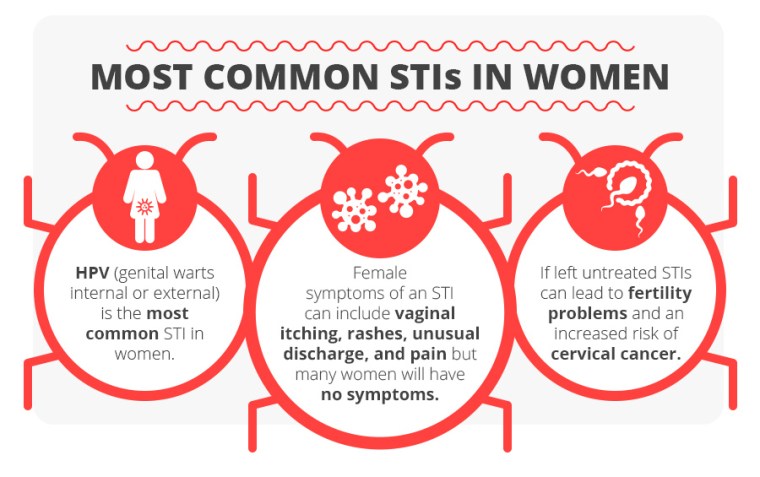
STIs, or STDs (sexually transmitted diseases), affect women differently than men. Because the vagina is moist and has a thin lining, it’s easier for a woman to get an STI than it is for a man to get one. Also, a woman is less likely to have symptoms of common STIs — such as chlamydia and gonorrhea — compared with a man. That means that a woman could have an STI and not know it.
Untreated STIs can lead to pelvic inflammatory disease, which can result in ectopic pregnancy and infertility, making it difficult, even impossible for a woman to have a baby. A woman who is pregnant can pass an STI to her baby. Genital herpes, syphilis, and HIV can be passed to babies during pregnancy and delivery.
A woman who has an STI is also more likely to get HIV, the virus that causes AIDS. STIs that cause sores — such as genital herpes, syphilis, and chancroid — can make it easier for HIV to enter the body.
Common women disease
Vaginal Discharge
Pelvic Inflammatory Disease
Contraception
Emergency Contraception
Irregular Menses/Periods
Recurrent/Acute Urinary Tract Infections
Vaginal Lumps and Bumps