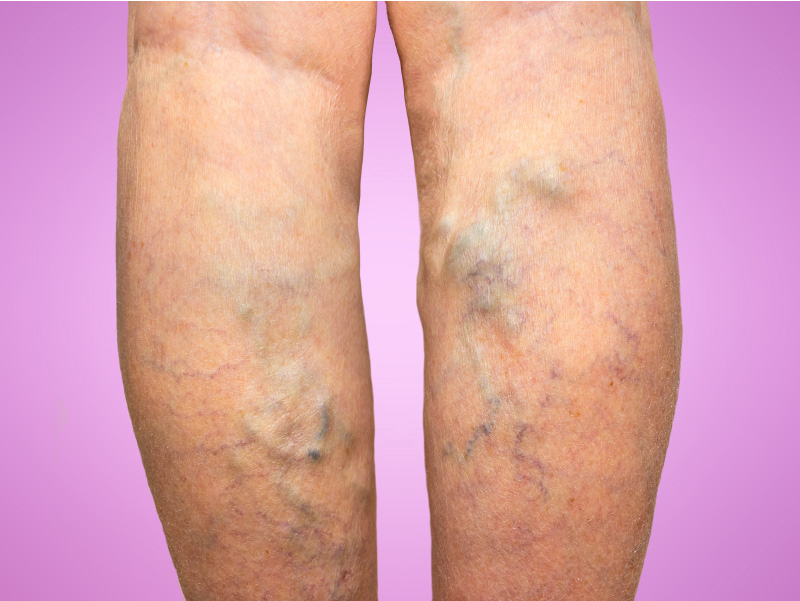
Varicose veins are enlarged, dilated tortuous veins that occur either in any part of the body, but more often in the legs. They occur due to poor functioning of the valves in the veins. If untreated they can result in swelling, discolouration and difficult to heal ulcers in the ankles.
How does the 1470nm EVLT system actually work to treat varicose veins?
A laser fiber is fired inside and along the length of your faulty, varicose vein. The laser energy heats the blood, which then damages the vein wall, shrinking them closed so that blood can no longer flow through.
How successful is the EVLT procedure?
Clinical data with up to 5 years of follow-up show success rates of 93-98%. This is much higher than surgical ligation and stripping, radiofrequency electrosurgery, and injection sclerotherapy. Laser treatment for varicose veins has become the ‘gold standard’.
What are alternative varicose vein treatments?
Surgery (called ‘Ligation & Stripping’) is the traditional treatment, but it can be quite painful and often has a long recovery time. It is performed in a hospital, involves general anesthesia, leaves a scar, and has a fairly high recurrence rate (on average 10-25%). Other alternatives include ultrasound-guided sclerotherapy (injection therapy) and radio frequency electro surgery. Injection therapy for the saphenous vein has a high recurrence rate, frequently requiring retreatment, and is generally limited to smaller varicose and spider veins. Radiofrequency electrosurgery is more limited in the range of patients it can treat, and the treatment time is longer than with EVLT.